

The 13th International Symposium on Applied Computing for Software and Smart Systems (ACSS-2026) is to be held during July 02-03, 2026 in Kolkata, India. ACSS 2026 is aimed at offering a qualified opportunity for presentation and discussion of the innovative works by undergraduate, graduate students and as well as research scholars. While the emphasis of the workshop is on Software and Smart Systems, we solicit research outcomes on other relevant areas pertaining to advancement of computing.

Some of the selected papers are to be included in a Special Issue of the Springer Nature Journal of Innovations in Systems & Software Engineering (ISSE) or in the International Journal of Biometrics.
Visit ISSE Visit IJBM






Department of Computer Science & Engineering
University of Calcutta, India


The ACSS-2026 International Symposium aims to facilitate research scholars to present and discuss their research works with senior researchers in a constructive and friendly atmosphere. Since March 17, 2017, there have been a total of 4477 chapter downloads for the eBook on SpringerLink
Extened Paper Submission Date : January 26, 2026
Author Notification : March 18, 2026 March 19, 2026
Camera Ready Submission & Author Registration : March 31, 2026 April 8, 2026
Symposium : July 02-03, 2026
We welcome all such authors to submit research papers to the 13th International Symposium on Applied Computing for Software and Smart Systems (ACSS-2026). Any work that is not presented in ACSS-2026 shall not be included in the conference book. This symposium would be best suited for researchers who work in one of the following broad areas:
The submission draft for full papers should be limited to 10-12 pages. All papers will be carefully reviewed by the program committee and a balanced program will be selected based on relevance and technical soundness. Each paper will receive at least two blind reviews. Please note that author names, affiliations, etc. are not to be included in any form in the manuscript. The selected and presented works for ACSS 2026 are to be published after the symposium by Springer as an edited book in the Lecture notes in Networks and Systems book series. Selective papers are to be included in a Special Issue in the Springer Nature Journal of Innovations in Systems & Software Engineering (ISSE) or in the International Journal of Biometrics.
| Category | From India | From Abroad |
|---|---|---|
| Author (Oral Presentation) | INR 8000 | 400 US Dollar |
| Listener | INR 2000 | 100 US Dollar |
| Industry | INR 10,000 | 500 US Dollar |
| Bank Name | : | Bank of Baroda |
| Branch Name | : | Rajabazar Science College Branch, Kolkata |
| Account Title | : | ACSS-CU |
| Account Number | : | 98210100001607 |
| IFSC Code | : |
BARB0EXTCOL
(The fifth character from left is number "0") |
| Swift Code | : | BARBINBBIBB |
| Branch Address | : | 92 APC Road, Kolkata 700009, India |
Upon acceptance of their papers for inclusion in the ACSS (Applied Computing for Software and Smart Systems) conference proceedings published by Springer, authors are required to download and complete a copyright form. This form serves as a formal agreement between the authors and Springer, granting Springer the necessary rights to publish and distribute the accepted papers.
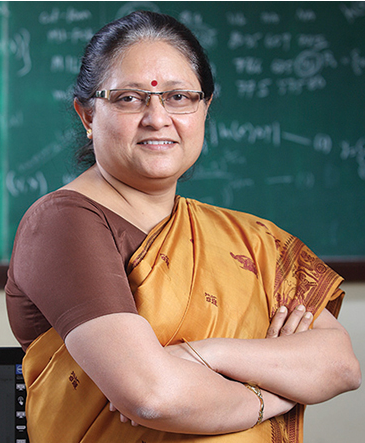
Artificial Intelligence (AI) and Machine Learning (ML) algorithms find extensive applications in all domains of scientific research, in particular in diverse areas of life sciences for making novel discoveries and for gaining deeper insights into various processes of life. In this talk we will first present brief overviews of artificial intelligence, machine learning and molecular biology. In particular, a quick introduction to the central dogma of molecular biology will be provided, which is fundamental to the understanding of a large class of machine learning applications in biology. Various kinds of data sets emerging in different areas of healthcare research will be mentioned. We will then discuss some case studies in a few areas of biology, namely, molecular target prediction, a graph theoretic method for biomarker identification and graph based approaches in drug interaction studies. The talk will conclude with a mention of some issues and challenges in this area.

As neural networks are increasingly deployed in complex real-world applications, the need to understand, justify, and improve their decision-making processes becomes ever more important. This invited talk will focus on Sensitivity Analysis as a powerful method within Explainable Artificial Intelligence (XAI), offering insights into how neural network outputs respond to changes in inputs, parameters, neurons, or the model's structure. The presentation will introduce the fundamental idea of sensitivity-based explanations: identifying which features, weights, neurons, or layers have the strongest influence on the model's behaviour. By analysing a neural network's response to controlled perturbations, gradient-based measures, or other sensitivity indicators, it is possible to reveal hidden dependencies, detect fragile or redundant components, and better understand the internal mechanisms of black-box models. Particular attention will be devoted to the role of Sensitivity Analysis in neural network pruning. The talk will show how sensitivity measures can guide the removal of less important weights, neurons, filters, or connections, leading to more compact and efficient models while preserving predictive performance. In this context, sensitivity-based pruning will be discussed not only as an optimisation technique, but also as an explainability-driven approach that helps expose which parts of the network are truly essential to its decisions. Through illustrative examples, the presentation will demonstrate how Sensitivity Analysis supports model interpretation, validation, compression, and trustworthiness. Its advantages, limitations, and its relation to other XAI methods, such as saliency maps, feature-importance techniques, LIME, and SHAP, will also be considered. The talk will highlight the importance of combining explainability with efficiency, showing how XAI methods can contribute both to human understanding and the design of more transparent, reliable, and resource-aware neural network systems.
Selected manuscripts in the appropriate domain would be recommended for publishing in a special issue on "Artificial Intelligence in Systems Engineering" of the Springer-Nature NASA Journal Innovations in Systems & Software Engineering (ISSE) (confirmed by Springer). All the remaining accepted papers will be published in a Springer-Nature series volume indexed in Scopus, Thomson Reuters (ISI Proceedings), EI-Compendex, DBLP, etc.
Khalid Saeed, Bialystok University of Technology, Poland
Nabendu Chaki, University of Calcutta, Kolkata, India
Agostino Cortesi, Ca' Foscari University, Venice, Italy
Rituparna Chaki, University of Calcutta, Kolkata, India
Novarun Deb, University of Calgary, Canada
Sankhayan Choudhury, University of Calcutta, Kolkata, India
Nagaraju Devarakonda, VIT-AP University, India
Monowar Bhuyan, Umea University, Sweden
Ca' Foscari University, Venice, Italy
Bialystok University of Technology, Poland
University of Calgary, Canada
Souvick Das, University of Luxembourg, Luxembourg
Rounak Saha, University of Calcutta, India
Acharya Prafulla Chandra Sikhsha Prangan
University of Calcutta
JD-2,Sector-3,Salt Lake
Kolkata 700106
New Town Terminus, B.G-12,
Action Area I, 1-B, Rajarhat,
Kolkata 700156
The 13th International Symposium on Applied Computing for Software and Smart Systems (ACSS-2026) is to be held during July 02-03, 2026 in Kolkata, India. ACSS 2026 is aimed at offering a qualified opportunity for presentation and discussion of the innovative works by undergraduate, graduate students and as well as research scholars. While the emphasis of the workshop is on Software and Smart Systems, we solicit research outcomes on other relevant areas pertaining to advancement of computing.
Copyright © 2026 All Rights Reserved by ACSS.
 Download
 Download
 Download
 Download
 Download
 Download
 Download
 Download
 Download
 Download
 Download
 Download